
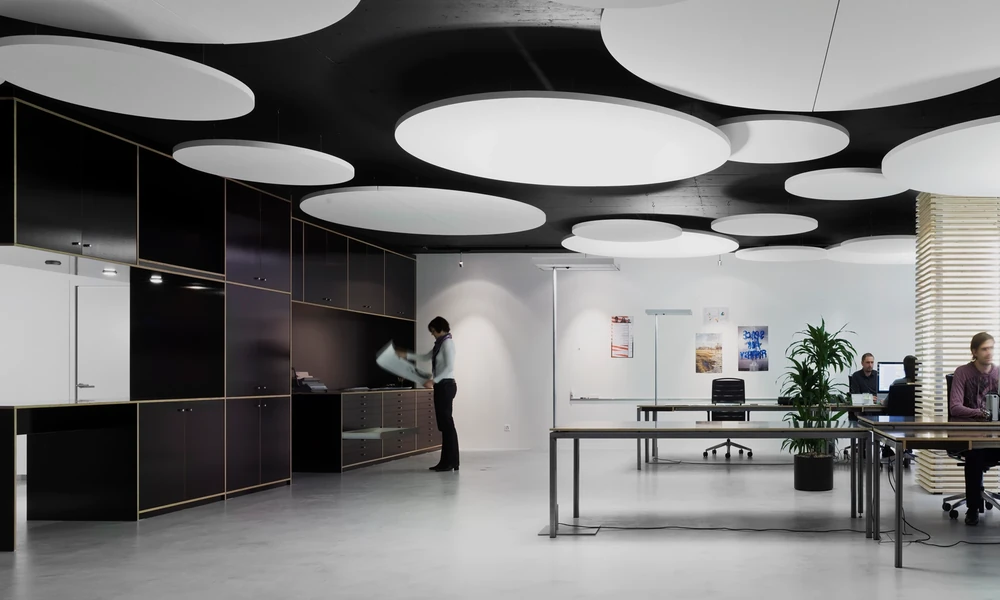

Once ceiling acoustic panels are installed, most people expect an immediate improvement. And in many cases, there is one. The space feels more controlled, conversations seem easier to follow, and there’s less of that lingering build-up of sound.
But here’s the thing. Acoustic improvements can be subtle. Unlike visual changes, you don’t always have a clear before-and-after moment. That’s why it helps to know what to look out for when evaluating whether your ceiling panels are actually doing their job.
You don’t need specialised equipment to get a good sense of their effectiveness. With a bit of observation and a few simple checks, you can tell whether your setup is working as intended.
Start with how conversations feel.
One of the easiest ways to evaluate acoustic performance is to pay attention to everyday conversations.
In a well-treated space, speech should feel clearer and more direct. You shouldn’t have to focus too hard to follow what someone is saying, even if there are other sounds in the background.
If voices still feel slightly blurred or seem to linger in the room, it may mean that sound reflections are still present and not fully controlled.
Try speaking from different spots in the room and notice how consistent the clarity feels. If it changes significantly depending on where you stand, panel placement might need adjustment.
Listen for a lingering sound after speaking.
A simple test is to clap your hands or speak a short phrase and listen carefully to what happens next.
In untreated spaces, sound tends to hang in the air for a moment as it reflects off surfaces. With effective acoustic ceiling panels, that lingering effect should be reduced.
You’re not aiming for complete silence after the sound. Instead, you’re looking for a quicker, more natural fade.
This is often one of the most noticeable signs that ceiling panels are working properly.
Observe how sound spreads across the room.
Another useful check is to see how sound travels from one part of the room to another.
In spaces without proper acoustic control, sound can carry easily across the entire area. Conversations from one corner may still be clearly heard on the opposite side.
With effective ceiling treatment, that spread should feel more contained. Sound still travels, but it doesn’t dominate the entire room as strongly.
This is especially relevant in open-plan offices, dining areas, or large living spaces.
Pay attention during busy moments.
Acoustic issues often become more noticeable when a space is in use.
A room might feel fine when it’s empty, but once multiple people start talking, moving, or interacting, sound can build up quickly.
This is where ceiling panels prove their value.
During busy periods, the environment should still feel manageable. Conversations shouldn’t compete as aggressively with one another, and the overall sound level should feel more balanced rather than overwhelming.
If the space still feels chaotic during peak use, additional panels or better placement might be needed.
Check for echo-prone areas.
Even with ceiling panels installed, certain areas of a room may still have stronger reflections than others.
Walk around the space and listen for spots where sound feels different. Corners, areas near large walls, or sections far from the panels may still reflect sound more strongly.
Identifying these areas helps you understand whether coverage is sufficient or if additional treatment is required.
Sometimes the issue isn’t the ceiling panels themselves, but the lack of support from wall treatments.
Look at panel coverage and placement.
Effectiveness isn’t just about having panels on the ceiling. It’s also about where they’re positioned.
Panels should be placed above key activity zones, such as:
- Meeting tables
- Workstations
- Dining areas
- Seating zones
If panels are installed too far away from where sound is generated, their impact will be limited.
Spacing also matters. Panels that are too far apart may leave untreated gaps where sound can still reflect freely.
A quick visual check can often reveal whether placement aligns with how the space is actually used.
Consider the room’s materials.
Ceiling panels are only one part of the acoustic equation.
If the room still has many hard, reflective surfaces such as glass walls, tiled floors, or bare concrete, sound will continue to reflect from those areas.
In this case, ceiling panels may be working as intended, but additional wall or floor treatments might be needed to achieve the desired result.
It’s about the overall balance of the space, not just one element.
Use simple before-and-after comparisons.
If possible, think back to how the space felt before the panels were installed.
Even without recordings or measurements, most people can recall whether a room felt more echo-prone or harder to use for conversations.
Comparing that memory with the current experience can give you a good sense of improvement.
If the difference feels minimal, it might be worth reviewing placement or increasing coverage.
When to consider professional testing.
For larger commercial spaces, a more precise evaluation may be required.
Acoustic professionals can measure reverberation time and other performance metrics using specialised equipment. This provides a more detailed understanding of how the space is performing.
However, for most homes and smaller offices, practical observation is usually enough to identify whether improvements are needed.
Common signs panels may not be working effectively.
There are a few clear indicators that ceiling panels may not be delivering the expected results:
- Sound still lingers noticeably after speech or noise
- Conversations feel difficult to follow in group settings
- Noise spreads easily across the entire room
- Certain areas feel much more reflective than others
If you notice these issues, it doesn’t necessarily mean the panels are ineffective. It often points to placement, quantity, or the need for additional treatment elsewhere.
Final Thoughts
Evaluating acoustic panels isn’t about achieving perfection. It’s about improving how a space feels in everyday use.
Ceiling panels should help create a more balanced environment where sound behaves in a controlled and natural way. Conversations become clearer, and the overall atmosphere feels easier to manage.
With a few simple observations and adjustments, you can get a clear sense of whether your panels are doing their job and what steps to take next if they aren’t.
In the end, it’s less about technical measurements and more about how the space works for the people using it every day.