


What is a Data-Driven Strategy and Why Intuition is No Longer Enough
At its core, a data-driven strategy is an organizational approach where every significant decision, from daily operations to long-term strategic planning, is informed and validated by data analysis rather than solely by intuition or anecdotal evidence. This shift towards a decision-driven model represents a fundamental evolution in how businesses operate. We move from simply collecting data to actively using it to understand “what happened,” “why it happened,” “what will happen,” and “what should we do.”
Traditional business decision-making often relied heavily on the experience and “gut feelings” of seasoned leaders. While intuition can sometimes be valuable, it is inherently susceptible to cognitive bias and confirmation bias, leading to suboptimal outcomes. In today’s hyper-competitive landscape, where market trends shift rapidly and customer expectations are constantly evolving, such an approach is a significant gamble. Data-driven strategies offer a more objective, evidence-based path to achieving competitive advantage, enhancing risk mitigation, and refining strategic planning. Organizations that successfully implement robust data strategies, such as those employing advanced analytics for TRAX data-driven strategies, demonstrate a clearer path to sustainable growth.
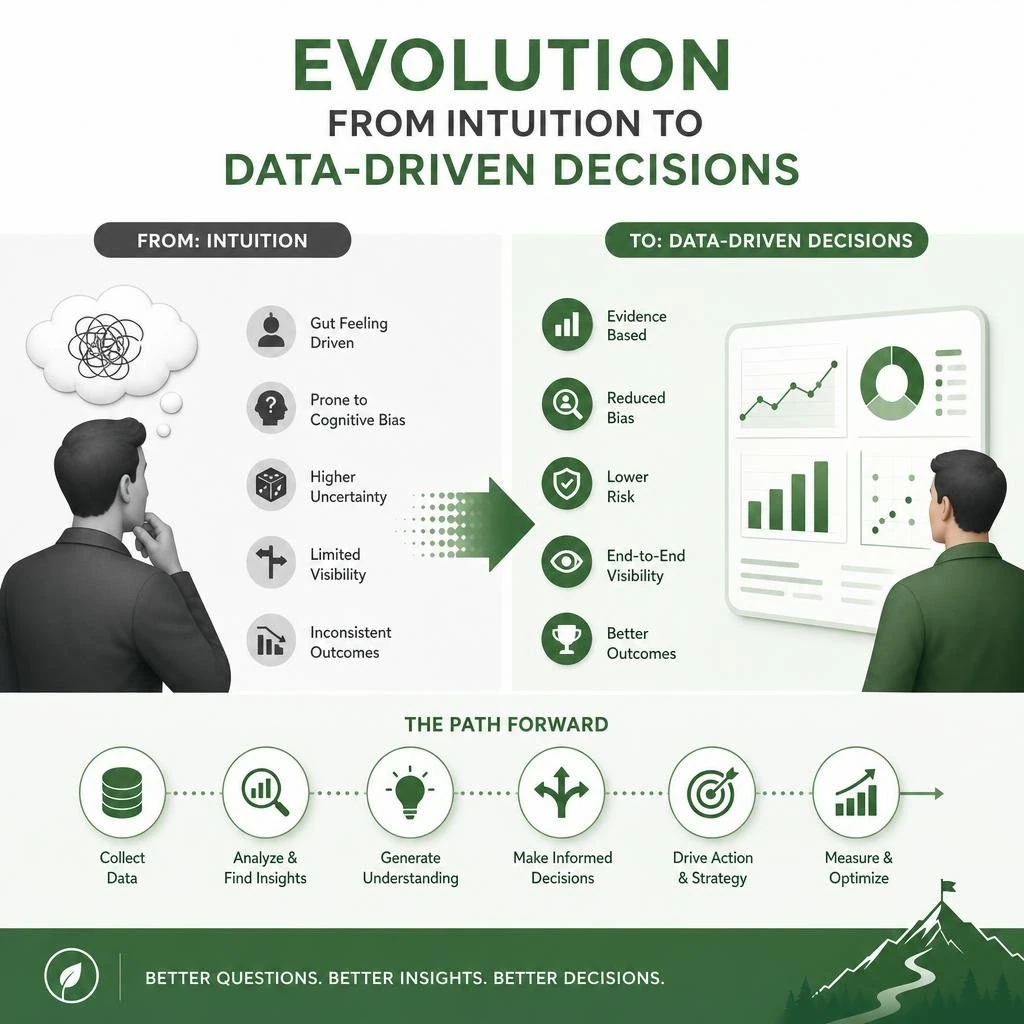
The Shift from Gut-Feeling to Evidence-Based Decisions
The transition from intuition-based decisions to evidence-based ones involves a deliberate process of leveraging both quantitative data and qualitative data. Quantitative data, such as sales figures, website traffic, or customer demographics, provides measurable insights into performance and behavior. Qualitative data, gathered through customer feedback, surveys, or focus groups, offers deeper context and understanding of motivations and perceptions.
A critical aspect of this shift is understanding decision provenance-not just what was decided, but the information available at the time, the alternatives considered, and the rationale behind the final choice. This creates a valuable institutional memory, allowing us to learn from past decisions and refine future strategies. Over-reliance on historical data alone can be problematic, especially in rapidly changing environments. Therefore, integrating real-time analytics becomes paramount, enabling immediate responses to current conditions and fostering proactive business practices. This blend of historical context with live insights minimizes uncertainty and increases confidence in our strategic choices.
The Financial Impact of Data-Driven Business Strategies
The benefits of adopting a data-driven approach are not merely theoretical; they translate into tangible financial improvements. Research consistently shows that organizations embracing data-driven decision-making outperform their peers. For instance, firms that actively use data-driven methods report 5-6% higher output and productivity compared to those with similar investments in IT.
Beyond productivity, the positive impact extends to other key financial metrics:
- Asset utilization: Data helps optimize the use of physical and digital assets, reducing waste and improving efficiency.
- Return on equity: Better decisions lead to more profitable investments and improved shareholder value.
- Market value: Companies demonstrating strong data capabilities are often viewed more favorably by investors.
- Profit margins: Data-driven organizations are 19 times more likely to be profitable, 23 times more likely to acquire customers, and 6 times more likely to retain them. They also report 5-8 times higher ROI on their data investments.
These statistics underscore a clear message: data is no longer just an IT concern; it’s a strategic asset directly impacting the bottom line and driving superior business performance.
Key Components and Capabilities of Successful Data-Driven Business Strategies
Implementing a successful data-driven strategy requires a robust framework built on several interconnected components and capabilities. These elements work in concert to transform raw data into actionable insights that guide our strategic direction.
At the foundation, we have data collection, the process of gathering relevant information from various internal and external sources. This data then undergoes data integration, where disparate datasets are combined and harmonized to create a unified, comprehensive view. Once integrated, data analysis techniques are applied to extract meaningful patterns, trends, and insights. These insights are then used to inform data-driven decision-making, which in turn requires continuous performance measurement through key performance indicators (KPIs) to evaluate the effectiveness of implemented strategies.
Underpinning these processes are critical capabilities such as data governance and master data management. Data governance establishes the policies, processes, and responsibilities for managing data assets, ensuring their accuracy, consistency, and security. Master data management (MDM) focuses specifically on the core data entities vital to an organization (e.g., customers, products, locations), ensuring their consistency across all systems. Without these foundational elements, the integrity and reliability of our data-driven insights would be compromised.

Essential Technology Infrastructure and Tools
The technological backbone for data-driven strategies is complex and constantly evolving. It encompasses a suite of tools and platforms designed to handle the volume, velocity, and variety of modern data.
- Business Intelligence (BI) tools: These platforms enable us to collect, process, and visualize data, often through dashboards and reports, providing accessible insights for decision-makers.
- Data warehousing and data lakehouses: These are centralized repositories for storing large volumes of structured and unstructured data, optimized for analytical queries. A data lakehouse architecture, for instance, combines the flexibility of a data lake with the structure of a data warehouse.
- ETL (Extract, Transform, Load) tools: These are crucial for moving data from various sources into data warehouses or lakehouses, cleaning and transforming it along the way.
- Machine Learning (ML) and AI platforms: These advanced tools are vital for predictive modeling, pattern recognition, automation, and generating prescriptive insights. They allow us to forecast future trends, personalize experiences, and even automate decision-making processes.
- Data integration and analytics platforms: Solutions that consolidate various data sources and provide advanced analytical capabilities are key for comprehensive Data-driven business strategies.
Investing in the right technology is crucial, but it’s equally important to select tools that align with our specific business needs, scalability requirements, and existing infrastructure.
Critical Organizational Roles and Capabilities
Beyond technology, human capital and organizational structure are paramount. A truly data-driven organization requires a diverse set of skills and roles:
- Data engineers: Responsible for designing, building, and maintaining the data infrastructure and pipelines.
- Data architects: Oversee the overall data strategy, ensuring data systems are scalable, secure, and meet business needs.
- BI developers: Create reports, dashboards, and visualizations that translate complex data into understandable insights.
- Data analysts: Interpret data, identify trends, and provide actionable recommendations to business stakeholders.
- Machine Learning engineers: Develop and deploy AI/ML models for predictive and prescriptive analytics.
- Chief Data Officer (CDO) / Chief AI Officer (CAIO): Senior leaders responsible for the organization’s data strategy, governance, and leveraging data for competitive advantage.
Crucially, fostering data literacy across the entire organization is a key capability. This means empowering employees at all levels to understand, interpret, and apply data in their daily work, moving beyond a small group of specialists to embed data thinking into the organizational DNA.
A Step-by-Step Playbook for Building a Data-First Culture
Building a data-first culture is less about technology and more about people, processes, and change management. It requires a deliberate and sustained effort, starting with strong leadership alignment and a clear vision. Our goal is to make data accessible and understandable to everyone, fostering data democratization while ensuring integrity. This involves creating a culture where insights are shared through compelling data storytelling, and decisions are continuously refined through robust feedback loops.
Overcoming Cultural Resistance and Data Illiteracy
One of the biggest hurdles to becoming data-driven is cultural resistance. Employees may be comfortable with existing processes, lack the skills to work with data, or distrust data insights. To address this, we must:
- Break down silos: Facilitate cross-functional data flow and collaboration. Data should not be confined to individual departments.
- Implement training programs: Provide accessible and relevant training in data literacy, analytical tools, and data interpretation for all staff.
- Utilize data translators: These individuals bridge the gap between technical data teams and business stakeholders, translating complex analytical findings into actionable business language.
- Encourage objective analysis: Promote a culture where data is used to test hypotheses and challenge assumptions, rather than confirm existing beliefs. Implement debiasing techniques to counteract cognitive biases like confirmation bias and groupthink during decision-making.
- Celebrate wins: Publicly recognize and celebrate successful outcomes achieved through data-informed decisions to reinforce the value of the new approach.

Establishing Robust Data Governance and Quality Protocols
The adage “garbage in, garbage out” holds true for data. Poor data quality can lead to misguided decisions and erode trust in the entire data-driven initiative. Therefore, establishing robust data governance and quality protocols is non-negotiable:
- Data cleansing: Regularly identify and correct errors, inconsistencies, and duplicates in datasets.
- Validation and standardization: Implement processes to ensure data conforms to predefined rules and formats, maintaining consistency across systems.
- Data privacy and regulatory compliance: Adhere to regulations such as GDPR, CCPA, and HIPAA. This includes anonymizing personally identifiable information (PII) where necessary and implementing strong access controls.
- Security protocols: Protect data from unauthorized access, breaches, and cyber threats through encryption, access management, and regular audits.
- Data ownership and stewardship: Clearly define who is responsible for the quality and integrity of specific datasets within the organization.
Data governance is not about restricting access but building trust and ensuring that the data we rely on is accurate, secure, and compliant.
Applying Data-Driven Business Strategies Across Key Business Functions
Data-driven strategies are not confined to a single department; they permeate every facet of an organization, enabling optimization and innovation across diverse business functions.
Business Function Data-Driven Application Key Benefits Marketing Personalization, predictive targeting, demographic planning, campaign optimization, customer journey mapping Higher conversion rates, improved customer engagement, optimized ad spend, stronger brand loyalty Operations Inventory management, site selection, demand forecasting, real-time tracking, fraud detection, resource optimization Reduced costs, enhanced efficiency, improved supply chain resilience, better risk management Customer Experience Customer retention, personalized recommendations, sentiment analysis, proactive support, omnichannel insights Increased customer satisfaction, reduced churn, higher lifetime value, improved brand reputation Optimizing Digital Marketing and Customer Experience
In marketing, data allows for unparalleled personalization. By analyzing customer behavior, preferences, and demographics, we can tailor messages, offers, and product recommendations. This leads to higher engagement and conversion rates. Key applications include:
- Omnichannel integration: Sharing data across different marketing channels creates a unified customer profile, enabling seamless and consistent experiences.
- Customer journey mapping: Data helps us understand every touchpoint in the customer journey, identifying pain points and opportunities for improvement.
- Predictive targeting: Using advanced analytics to identify high-potential customers and predict future purchasing behavior, optimizing ad placement and timing.
- Demographic planning: Leveraging demographic data (e.g., from census bureaus) to plan highly targeted campaigns.
- Data onboarding: Transforming offline customer data into usable online marketing insights, deepening audience understanding.
For instance, a global online retailer uses customer data extensively to build targeted marketing campaigns and enhance its recommendation engine, creating personalized shopping experiences that drive significant revenue.
Streamlining Operations and Supply Chain Management
Operations and supply chain management benefit immensely from data-driven insights, leading to enhanced efficiency and cost savings:
- Real-time tracking: Monitoring inventory levels, logistics, and production processes in real-time allows for immediate adjustments and proactive problem-solving.
- Site selection: A global coffee brand, for example, optimizes its site selection strategy using geographic information system (GIS) technology, analyzing demographic data, traffic patterns, and competitor locations to ensure optimal performance for new stores.
- Demand forecasting: Predictive models analyze historical sales data, market trends, and external factors to accurately forecast future demand, minimizing overstocking or stockouts.
- Fraud detection: Financial institutions use machine learning algorithms to detect and prevent fraudulent transactions by identifying unusual patterns in real-time.
- Resource optimization: Data helps allocate resources (e.g., labor, machinery, energy) more efficiently, reducing waste and improving productivity.
A multinational retailer, for instance, uses historical sales data to manage its inventory, discovering that certain products had significant sales spikes before hurricanes, allowing them to stock these items heavily in anticipation of storms and meet customer needs.
Real-World Case Studies of Data-Driven Success
The impact of data-driven strategies is best illustrated through real-world examples where organizations have transformed their performance by leveraging insights.

Entertainment and Retail Personalization Breakthroughs
- Netflix’s ‘House of Cards’: Instead of relying on traditional pilot testing, Netflix used viewing data to identify subscriber preferences for specific actors (Kevin Spacey), directors (David Fincher’s style), and genres (political dramas). This data-driven insight led to the successful commissioning of ‘House of Cards,’ which became the most-streamed content in the United States and across 40 other countries. They further personalized marketing by creating multiple trailers tailored to individual viewing habits.
- Starbucks’ Pumpkin Spice Latte Campaign: During the 2020 lockdown, Starbucks aimed to recapture pre-COVID sales levels for its iconic Pumpkin Spice Latte. They partnered with agencies to analyze anonymized mobile data from over 20 million UK handsets. This allowed them to target at-home customers with highly personalized campaigns, resulting in the campaign significantly over-delivering on sales targets. This demonstrates the power of targeted marketing and mobile data analysis combined with demographic targeting.
Operational and Site Selection Optimization
- Global Coffee Brand Site Selection: As mentioned earlier, a popular coffee brand utilizes geographic information systems (GIS) technology to analyze various data points, including demographic traffic, local competition, and socioeconomic factors. This data-driven approach allows them to identify optimal locations for new stores, significantly improving their chances of success and maximizing sales.
- Retailer Disaster Preparedness: A major multinational retailer uses historical sales data to anticipate spikes in demand for specific products during natural disasters. By analyzing past purchasing patterns before events like hurricanes, they can implement predictive stocking strategies, ensuring essential items are available in affected areas. This not only improves customer satisfaction but also enhances their operational resilience and community support during crises. This ability to use data for inventory preparation in anticipation of specific events is a powerful example of data-driven operational efficiency.
Frequently Asked Questions about Data-Driven Business Strategies
What is the first step in transition from intuition to a data-driven strategy?
The very first step is to clearly define your core business objectives. Before collecting any data or investing in tools, we need to ask: “What are we trying to achieve?” Once objectives are clear, we can then identify the key performance indicators (KPIs) that will measure progress towards those objectives. Following this, conducting a thorough data audit to understand existing data sources and their quality is crucial. Finally, securing stakeholder alignment from leadership down is essential to ensure buy-in and resource allocation for the data-driven transformation.
How can small businesses implement data-driven strategies on a limited budget?
Small businesses can absolutely implement data-driven strategies without a huge budget. Start by focusing on core metrics that directly impact your business goals. Utilize readily available free tools like Google Analytics for website insights, Google Sheets for basic data organization, and free tiers of CRM software. Leverage cloud analytics platforms that offer scalable, pay-as-you-go services. The key is to prioritize, starting with one or two critical areas, and build scalable infrastructure as the business grows. The emphasis should be on disciplined data collection and consistent analysis, rather than expensive, complex systems.
How do organizations balance data-driven insights with human intuition?
Balancing data-driven insights with human intuition is about creating a symbiotic relationship, not a replacement. Data provides the objective evidence and identifies patterns, but human intuition often brings invaluable contextual analysis, experience, and understanding of edge cases that data alone might miss. We encourage a process of hypothesis testing, where intuition can generate initial ideas or questions, which are then validated or refuted by data. This leads to collaborative decision-making, where data analysts and business leaders work together, using data as a starting point for discussion and refinement, rather than a final, unchallengeable answer. Intuition can highlight anomalies or areas for deeper data investigation, while data can challenge and refine intuition, leading to more robust and informed decisions.
Conclusion
In July 2026, the imperative for businesses to adopt Data-Driven Business Strategies has never been clearer. The sheer volume of data available, combined with advancements in analytics and AI, offers an unparalleled opportunity for organizations to gain strategic agility and achieve competitive differentiation.
We’ve explored how moving beyond intuition to evidence-based decision-making leads to measurable improvements in productivity, profitability, and customer satisfaction. We’ve outlined the essential components, from robust data governance and advanced technological infrastructure to critical organizational roles and a culture that champions data literacy. By applying these strategies across functions like marketing, operations, and customer experience, businesses can unlock new levels of personalization, efficiency, and growth.
The journey to becoming truly data-driven is not without its challenges, requiring significant effort in change management, cultural transformation, and continuous investment in capabilities. However, the real-world success stories of companies leveraging data for content personalization, campaign optimization, and operational excellence underscore the transformative power of this approach.
As we look to the future, continuous evaluation and adaptation will be key. Organizations that embrace data as a strategic asset, fostering a culture of curiosity and evidence-based action, will be well-positioned for future-proofing and achieving sustainable growth in an increasingly complex and data-rich world.